

Searching for Lab Tests Near You? Common Tests You Can Get at Richmond Medical Clinic
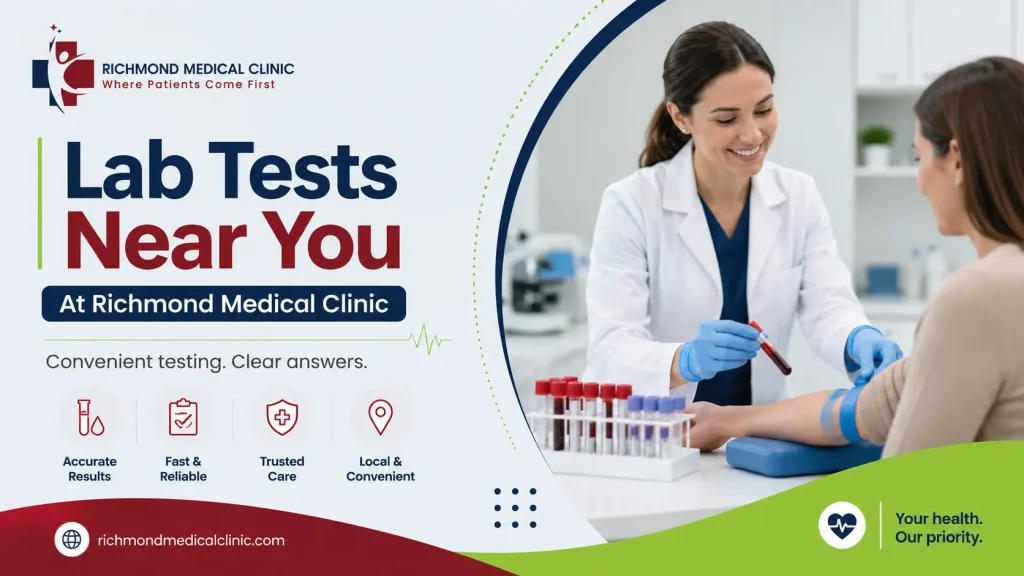
When you are not feeling your best or simply want to stay informed about your health, lab testing can provide important answers. Blood work and other medical tests can help your provider check for possible health concerns, monitor ongoing conditions, and guide the next steps in your care.
If you are searching for lab tests near you in Richmond, TX, Richmond Medical Clinic offers convenient medical lab testing services for adults, families, and patients who need reliable health information close to home. Whether you need routine blood work, thyroid testing, vitamin testing, metabolic panels, or custom lab testing, our team can help you understand which tests may be right for your health needs.
Why Lab Testing Is Important
Lab testing helps your provider look beyond symptoms. Some health concerns do not cause clear warning signs in the beginning. Conditions related to blood sugar, cholesterol, thyroid function, vitamin levels, hormones, kidney function, liver function, and inflammation may develop slowly.
A lab test does not replace a medical exam, but it can give your provider useful information. Your results may help confirm a concern, rule out possible causes, monitor an existing condition, or guide a treatment plan.
Lab testing can also be part of preventive care. Even if you feel healthy, routine testing may help identify changes early so you can take action before problems become more serious.
Common Lab Tests You Can Get at Richmond Medical Clinic
Different patients need different tests. Your provider may recommend lab work based on your age, symptoms, medical history, family history, medications, and health goals.

Common Lab Test |
What It May Help Check |
|
Complete Blood Count |
General blood health, anemia signs, infection signs, and immune-related markers |
|
Comprehensive Metabolic Panel |
Kidney function, liver function, electrolytes, blood sugar, and overall metabolism |
|
Lipid Panel |
Cholesterol levels and heart health risk factors |
|
A1C or Glucose Test |
Blood sugar levels and diabetes risk or monitoring |
|
Thyroid Function Test |
Thyroid hormone levels and possible thyroid imbalance |
|
Vitamin D Testing |
Low vitamin D levels when medically appropriate |
|
Urinalysis |
Possible infection signs, kidney concerns, hydration status, or urine changes |
|
Cardiovascular Panels |
Heart-related risk markers, depending on the test ordered |
|
Food Sensitivity Testing |
Possible food-related sensitivities when recommended by your provider |
|
Custom Test Panels |
Personalized testing based on symptoms, history, or health concerns |
Your provider will explain which tests are recommended and what your results may mean for your health.
Blood Work Near Me: What Does Routine Blood Testing Include?
Routine blood work may include a complete blood count, metabolic panel, cholesterol test, thyroid test, blood sugar test, or vitamin level check. These tests are commonly used during annual physical exams, wellness visits, chronic disease follow-ups, or when symptoms need further review.
For example, if you are feeling tired, dizzy, weak, or low on energy, your provider may recommend blood work to check for anemia, thyroid concerns, blood sugar changes, or vitamin deficiencies. If you have a family history of heart disease or diabetes, your provider may suggest testing to monitor cholesterol or blood sugar.
The goal is not just to collect numbers. The goal is to understand what those numbers mean in your personal health picture.
When Should You Consider Lab Testing?
You may need lab testing for routine wellness or when symptoms are ongoing. Some patients also need regular testing to manage chronic conditions, review medication safety, or monitor changes over time.

Reason for Lab Testing |
Examples of When It May Be Recommended |
|
Routine Checkup |
Annual physical exam, preventive care visit, or wellness screening |
|
Ongoing Fatigue |
Tiredness, weakness, low energy, dizziness, or brain fog |
|
Thyroid Concerns |
Weight changes, hair thinning, mood changes, cold sensitivity, or fatigue |
|
Diabetes Screening |
Increased thirst, frequent urination, family history, or high-risk factors |
|
Heart Health Monitoring |
High cholesterol, high blood pressure, family history, or lifestyle risk factors |
|
Chronic Disease Management |
Diabetes, hypertension, kidney concerns, liver concerns, or medication monitoring |
|
Women’s Health Concerns |
Hormone-related concerns, fatigue, wellness checks, or customized panels |
|
Men’s Health Concerns |
Energy changes, metabolic health, heart risk, or wellness monitoring |
|
Infection Symptoms |
Fever, urinary symptoms, illness signs, or provider-recommended testing |
If you are unsure which test you need, a medical visit can help your provider choose the right testing based on your symptoms and history.
Thyroid Function Testing
Thyroid testing may be recommended if you have symptoms such as fatigue, weight changes, hair thinning, mood changes, dry skin, irregular heartbeat, cold sensitivity, or trouble focusing. The thyroid plays an important role in metabolism, energy, and many body functions.
A thyroid function test can help your provider check whether your thyroid hormone levels may be too high, too low, or within a normal range. If results are abnormal, your provider may recommend follow-up testing or a treatment plan based on your health needs.
Vitamin D Testing
Vitamin D supports bone health, immune function, and overall wellness. Low vitamin D may not always cause clear symptoms, but some patients may notice fatigue, muscle aches, weakness, or general low energy.
Vitamin D testing may be recommended if you have risk factors for low levels, ongoing symptoms, limited sun exposure, certain diet patterns, or a medical history that makes testing appropriate.
Blood Panel for Men
A blood panel for men may help review important markers related to energy, metabolism, heart health, blood sugar, cholesterol, liver function, kidney function, and overall wellness. These panels can be helpful for men who want a clearer picture of their health or who are managing ongoing concerns.
Your provider may recommend specific tests based on age, symptoms, family history, medications, and personal health goals.
Blood Panel for Women
A blood panel for women may help review markers related to energy levels, metabolism, thyroid function, nutrient levels, blood sugar, cholesterol, and overall wellness. These tests can be useful when women are dealing with fatigue, weight changes, hormonal concerns, wellness goals, or routine preventive care.
Because every patient is different, your provider can help decide which panel or individual tests are most appropriate.
Metabolic Health Panels
Metabolic health panels can help your provider understand how your body is using energy and how key organs are functioning. These panels may include markers related to blood sugar, kidney function, liver function, electrolytes, and other health indicators.
Metabolic testing is often useful during routine checkups, diabetes screening, chronic disease management, or when symptoms such as fatigue, thirst, weight changes, or weakness need more evaluation.
Cardiovascular Panels
Cardiovascular panels may help evaluate heart-related risk factors. These tests may include cholesterol markers and other measurements based on your provider’s recommendation.
If you have high blood pressure, high cholesterol, diabetes, smoking history, obesity, family history of heart disease, or other risk factors, your provider may recommend cardiovascular testing as part of your care plan.
Custom Test Panels
Not every patient needs the same lab work. Custom test panels allow your provider to recommend testing based on your specific symptoms, health history, lifestyle, and goals.
For example, one patient may need thyroid and vitamin testing, while another may need cholesterol, blood sugar, and kidney function testing. Your provider can help build a testing plan that makes sense for your health.
What to Expect During Lab Testing
Most lab tests are simple and quick. Depending on the test, a blood sample, urine sample, or other specimen may be collected. Some tests may require fasting, while others do not. Your provider or clinic team will let you know how to prepare before your visit.
After your sample is collected, your results are reviewed by your healthcare provider. If anything needs follow-up, your provider can explain what the results mean and what steps may be recommended next.
It is important not to self-diagnose from lab results alone. A result should be reviewed with your symptoms, medical history, medications, and overall health picture.
Can Lab Testing Help With Preventive Care?
Yes. Lab testing can be an important part of preventive care. Regular testing may help identify early changes in blood sugar, cholesterol, thyroid function, vitamin levels, kidney function, or liver function.
Preventive lab testing is especially helpful for patients with a family history of diabetes, heart disease, thyroid disease, high cholesterol, or other chronic conditions. It can also help patients who want to stay proactive about long-term wellness.
Lab Testing and Chronic Disease Management
If you are managing diabetes, high blood pressure, high cholesterol, thyroid disease, kidney concerns, or another ongoing condition, lab testing may be part of your routine care. Your provider may use test results to monitor your progress, review medication safety, and adjust your care plan when needed.
Ongoing lab testing can help your provider track changes over time instead of relying on one result alone.
Lab Tests Near You in Richmond, TX
Choosing a local clinic for lab testing makes your care easier. Instead of visiting different places for checkups, testing, and follow-up guidance, Richmond Medical Clinic provides family care, preventive care, medical lab testing, and chronic disease support in one convenient location.
Our clinic serves patients in Richmond, Katy, Sugar Land, Rosenberg, Cinco Ranch, Fulshear, Missouri City, and nearby communities.
When to Seek Urgent Medical Care
Lab testing is helpful for many non-emergency concerns, but it is not a substitute for emergency care. If you have chest pain, severe trouble breathing, sudden weakness, signs of stroke, severe allergic reaction, major injury, confusion, or symptoms that feel life-threatening, call 911 or go to the nearest emergency room.
For non-life-threatening symptoms, Richmond Medical Clinic can help with medical visits, lab testing, urgent care, and follow-up support.
Schedule Lab Testing at Richmond Medical Clinic
If you are searching for lab tests near you in Richmond, TX, Richmond Medical Clinic is here to help. Our team can review your symptoms, health history, and wellness goals to recommend appropriate lab testing and explain your results clearly.