
Urgent Care vs Emergency Room: When Should You Go?
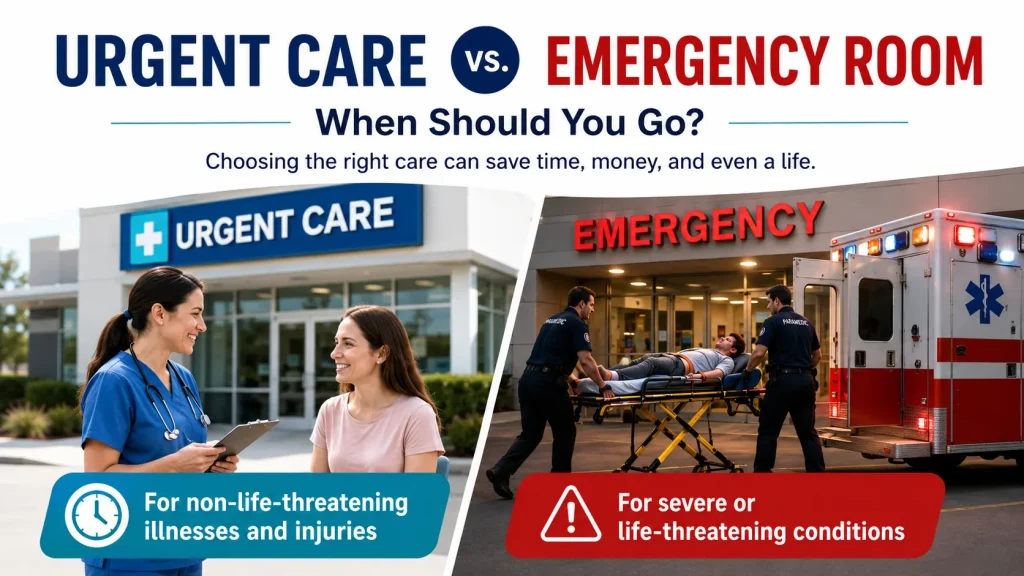
When you or someone in your family suddenly feels sick or gets injured, it can be confusing to decide between urgent care vs emergency room. Both options provide medical care, but they are used for different situations. Choosing the right one can help you get faster care, avoid unnecessary costs, and protect your health when symptoms are serious.
In general, urgent care is best for non-life-threatening conditions that need same-day attention. The emergency room is for severe, sudden, or life-threatening symptoms that may require hospital-level care. If symptoms are serious, such as chest pain, trouble breathing, severe bleeding, loss of consciousness, or signs of stroke, go to the ER immediately. If you are experiencing these symptoms and need an emergency room Houston residents can rely on, seek emergency medical care without delay. MedlinePlus also advises emergency care for warning signs like trouble breathing, fainting, sudden confusion, heavy bleeding, possible broken bones, deep wounds, serious burns, and severe pain.
Urgent Care vs Emergency Room Quick Difference
The simple difference is this: urgent care is for medical problems that need quick attention but are not life threatening. The emergency room is for serious symptoms that may be dangerous or require advanced hospital care.
For example, urgent care may be a good choice for fever, flu symptoms, sore throat, ear pain, minor cuts, mild sprains, urinary symptoms, rashes, basic lab testing, or physical exams. These problems can feel uncomfortable and may need prompt care, but they usually do not require emergency hospital treatment.
The ER is the safer choice for chest pain, difficulty breathing, stroke symptoms, severe bleeding, major injuries, severe allergic reactions, seizures, fainting, or sudden severe pain. CDC says stroke warning signs can include sudden numbness or weakness, sudden confusion, trouble speaking, vision problems, trouble walking, dizziness, loss of balance, or sudden severe headache, and people should call 911 right away if these symptoms appear.
What Is Urgent Care?
Urgent care is a convenient option for patients who need medical help quickly but do not have a life threatening emergency. It is often used when symptoms cannot wait for a routine appointment or when you need same day evaluation for a common illness or minor injury.
Patients often search for urgent care near me when they need help with fever, cough, cold symptoms, flu symptoms, sore throat, ear pain, minor injuries, infections, urinary symptoms, physical exams, or lab testing. Urgent care can also help guide you if your symptoms need a higher level of care.
For patients in Richmond, TX, Richmond Medical Clinic provides urgent care in Richmond TX for many non emergency conditions, along with family medicine, pediatric care, lab testing, telemedicine, and preventive care.
What Is an Emergency Room?
The emergency room is designed for severe or life threatening medical conditions. ERs have hospital level resources, advanced testing, emergency staff, and support for serious injuries or illnesses.
You should go to the emergency room if symptoms are severe, sudden, or worsening quickly. Emergency care may be needed for chest pain, trouble breathing, signs of stroke, heavy bleeding, loss of consciousness, major injury, poisoning, overdose, severe allergic reaction, or sudden severe abdominal pain.
Urgent Care vs Emergency Room Comparison
Understanding the difference between urgent care and the emergency room can help patients choose the right level of care. Urgent care is best for non life threatening conditions that still need quick medical attention, such as fever, flu symptoms, sore throat, minor cuts, mild sprains, urinary symptoms, or basic lab testing. It is a convenient option when you need same day care but are not experiencing severe or dangerous symptoms.
Category |
Urgent Care |
Emergency Room |
|
Best for |
Non-life-threatening illness or minor injury |
Severe, serious, or life-threatening symptoms |
|
Examples |
Flu, fever, sore throat, ear pain, minor cuts, sprains, UTI symptoms |
Chest pain, stroke signs, severe bleeding, trouble breathing, severe injuries |
|
Wait time |
Often shorter than ER |
Can be longer depending on severity and triage |
|
Cost |
Usually lower than ER |
Usually higher due to hospital-level care |
|
Testing |
Basic labs and common diagnostic tests, depending on clinic |
Advanced imaging, cardiac testing, trauma care, hospital-level testing |
|
Follow-up |
Good for short-term care and referral guidance |
Good for emergencies and hospital admission if needed |
|
Best keyword match |
urgent care near me |
when to go to the emergency room |
The emergency room is for serious or life threatening medical situations that may require hospital level treatment. Patients should go to the ER for chest pain, trouble breathing, signs of stroke, severe bleeding, loss of consciousness, major injuries, severe allergic reactions, or sudden severe pain. If symptoms are stable, urgent care may be appropriate, but if symptoms are severe, sudden, or worsening quickly, the ER is the safer choice.
When to Go to Urgent Care
You may choose urgent care for non emergency conditions that need prompt medical attention. These symptoms may not be life threatening, but they should still be checked by a medical provider.
Common reasons to visit urgent care include fever, flu symptoms, cough, sore throat, ear pain, sinus pressure, minor cuts, mild burns, sprains, strains, urinary symptoms, mild allergic reactions, rashes, nausea, vomiting, diarrhea, basic lab testing, and physical exams.
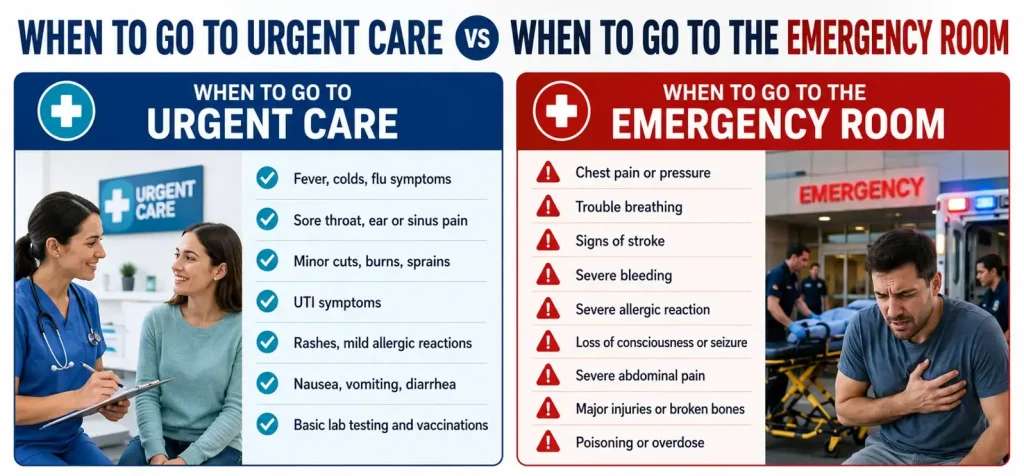
Urgent care can also be useful when symptoms are not improving, when you need a medical opinion before symptoms get worse, or when you need testing for common concerns like flu, strep, UTI symptoms, or other infections.
Common Conditions Treated at Urgent Care
You may consider urgent care for:
Urgent care is also useful when symptoms are uncomfortable, persistent, or affecting your normal routine, but you are still breathing normally, staying alert, and not showing severe warning signs.
When to Go to the Emergency Room
Knowing when to go to the emergency room can protect your health and may save a life. The ER is the right choice when symptoms are severe, sudden, or potentially life-threatening.
Seek emergency care for:
If you are asking yourself, “ER or urgent care? and the symptoms feel severe, dangerous, or rapidly worsening, choose the ER.
Urgent Care vs Emergency Room Cost
One reason many patients search for emergency room vs urgent care cost is because ER visits are usually more expensive than urgent care visits. Emergency rooms provide hospital-level care, advanced testing, and 24/7 emergency staffing, which can increase the total bill.
Urgent care is often more affordable for non-emergency conditions. However, the exact cost depends on your insurance plan, deductible, copay, testing needs, location, and whether additional services are required.
Cost Factor |
Urgent Care |
Emergency Room |
|
Typical visit cost |
Usually lower |
Usually higher |
|
Insurance copay |
Often lower than ER |
Often higher than urgent care |
|
Testing costs |
Varies by test |
Can be higher due to hospital resources |
|
Best use |
Non-emergency same-day care |
Life-threatening or severe conditions |
|
Patient takeaway |
Cost-effective when symptoms are not dangerous |
Necessary when symptoms may be serious |
Cost should never stop you from choosing emergency care when symptoms are severe. If you may be having a heart attack, stroke, severe allergic reaction, or another emergency, call 911 or go to the ER.
ER or Urgent Care for Common Symptoms
The table below can help guide your decision, but it should not replace medical judgment. If symptoms are severe or concerning, choose emergency care.
Symptom or Condition |
Urgent Care May Be Appropriate |
Go to the ER If |
|
Fever |
Mild to moderate fever, flu symptoms, sore throat |
Fever with confusion, stiff neck, trouble breathing, seizure, or severe weakness |
|
Chest discomfort |
Mild symptoms clearly related to muscle strain after evaluation guidance |
Chest pain, pressure, sweating, shortness of breath, or pain spreading to arm or jaw |
|
Breathing problems |
Mild cough or congestion without distress |
Severe shortness of breath, blue lips, wheezing that is not improving, or inability to speak normally |
|
Cuts |
Small cuts, minor wounds, simple wound care |
Deep wound, heavy bleeding, exposed tissue, or injury from major trauma |
|
Sprain or injury |
Mild swelling, pain after minor injury |
Bone deformity, severe pain, loss of movement, or major accident |
|
Stomach pain |
Mild stomach upset, nausea, diarrhea without red flags |
Severe abdominal pain, fainting, blood in vomit/stool, or rigid abdomen |
|
UTI symptoms |
Burning urination, frequent urination, mild pelvic discomfort |
Fever, back pain, vomiting, pregnancy concerns, or severe illness |
|
Allergic reaction |
Mild rash or itching without breathing problems |
Swelling of face/throat, trouble breathing, dizziness, or severe hives |
What to Bring to Your Visit
Whether you visit urgent care or the ER, bringing the right information can make your visit smoother.
Bring These Items :
If you are searching “urgent care near me” because you need quick care, check the clinic’s hours, location, accepted insurance, appointment options, and whether the clinic provides the service you need.
Final Thoughts
If your condition is not life-threatening but needs timely attention, Richmond Medical Clinic can help evaluate symptoms, provide testing when appropriate, and guide you toward the next step in your care.
Choosing between urgent care vs emergency room care does not have to be confusing. Urgent care is best for non-emergency conditions that need timely attention, such as flu symptoms, sore throat, minor injuries, urinary symptoms, and basic testing. The emergency room is the right choice for severe symptoms, serious injuries, chest pain, breathing problems, stroke signs, severe allergic reactions, or any condition that may be life-threatening.
If your symptoms are not life-threatening but you need prompt medical attention, Richmond Medical Clinic is here to help. Our team provides family medicine, urgent care support, pediatric care, lab testing, preventive care, and telemedicine services for patients in Richmond, TX and nearby communities.
Call Richmond Medical Clinic today at (832) 400-9623 or schedule your appointment online to get the right care without the guesswork.
Need Help Choosing the Right Care?
Richmond Medical Clinic provides same day care for non emergency conditions, including fever, flu symptoms, sore throat, minor injuries, infections, physical exams, pediatric care, family medicine, and lab testing.