

Chronic Disease Management: Diabetes, Blood Pressure, and Cholesterol Care
Living with a chronic health condition can feel overwhelming, especially when you are trying to manage medications, lab results, lifestyle changes, and regular follow-up visits. Conditions like diabetes, high blood pressure, and high cholesterol often need ongoing care instead of one-time treatment.
Chronic disease management focuses on helping patients monitor their health, understand their numbers, reduce health risks, and stay consistent with care. At Richmond Medical Clinic, patients in Richmond, TX can receive support for ongoing conditions through family medicine, preventive care, lab testing, medication review, and follow-up visits.
What Is Chronic Disease Management?
Chronic disease management is ongoing medical care for health conditions that last for months or years. Instead of only treating symptoms when they become serious, this type of care helps patients track progress, manage risk factors, and adjust treatment plans when needed.
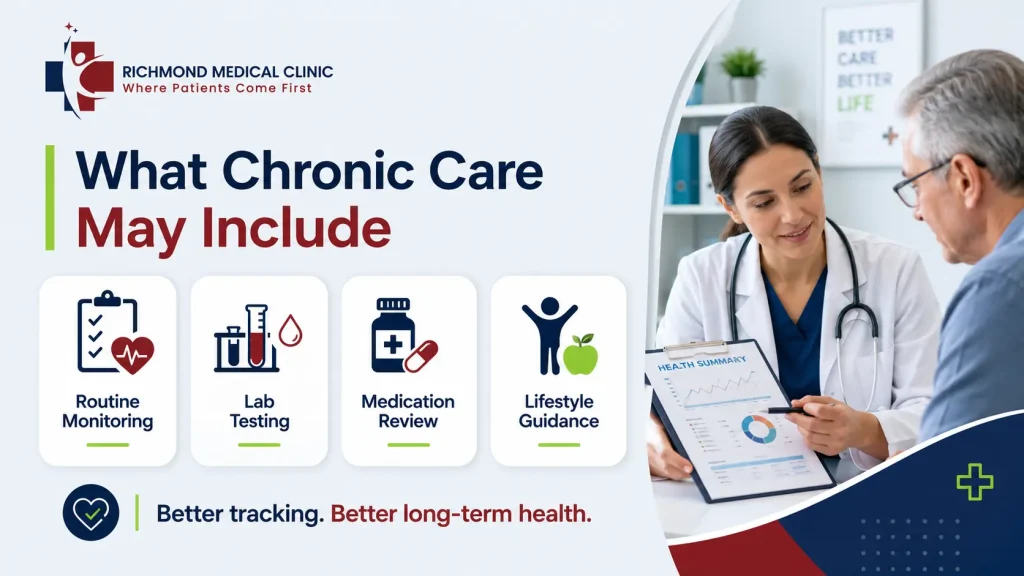
For many patients, chronic care may include routine checkups, blood pressure checks, lab testing, medication management, lifestyle guidance, and regular follow-up appointments. The goal is to help you stay informed and reduce the chances of complications.
Common conditions that may need chronic disease management include diabetes, high blood pressure, high cholesterol, asthma, thyroid disease, heart-related risk factors, kidney concerns, and other long-term health issues.
Why Chronic Disease Management Matters
Many chronic conditions do not always cause obvious symptoms in the beginning. High blood pressure may be present without clear warning signs. High cholesterol may not cause symptoms until it has already affected heart health. Diabetes can also develop slowly and may require ongoing blood sugar monitoring.
Regular care helps your provider review changes over time. Instead of looking at one result, your provider can compare your blood pressure, blood sugar, cholesterol, weight, medications, and lab results across multiple visits.
This makes it easier to notice patterns, adjust care when needed, and help you stay on track with your health goals.
Common Chronic Conditions We Help Monitor
Chronic disease management can look different for each patient. Your care plan depends on your medical history, symptoms, lab results, age, family history, medications, and personal health goals.
Condition |
What Ongoing Care May Include |
|
Diabetes |
Blood sugar checks, A1C testing, medication review, lifestyle guidance, and follow-up visits |
|
High Blood Pressure |
Blood pressure monitoring, medication review, diet and activity guidance, and risk tracking |
|
High Cholesterol |
Lipid panel testing, heart health risk review, lifestyle changes, and medication monitoring when needed |
|
Thyroid Disease |
Thyroid function testing, symptom review, medication follow-up, and lab monitoring |
|
Heart Health Risk |
Cholesterol review, blood pressure checks, diabetes screening, weight review, and preventive guidance |
|
Kidney or Liver Concerns |
Lab testing, medication safety review, and follow-up monitoring |
|
Asthma or Breathing Concerns |
Symptom review, medication management, and care planning |
|
Weight-Related Health Risks |
BMI review, lifestyle support, blood sugar screening, and cholesterol testing |
If these signs happen once in a while, they may be part of normal childhood behavior. If they happen often and cause ongoing difficulty, it may be time to speak with a medical provider.
Diabetes Care and Monitoring
Diabetes affects how the body uses blood sugar. Over time, uncontrolled blood sugar can increase the risk of heart disease, kidney problems, nerve concerns, vision problems, and other complications.
Diabetes care usually includes regular blood sugar monitoring, A1C testing, medication review, nutrition guidance, activity recommendations, and follow-up visits. Your provider may also check cholesterol, blood pressure, kidney function, and other markers because diabetes can affect more than one part of the body.
Patients with diabetes often benefit from having a consistent care plan. Regular follow-ups help your provider understand whether your current plan is working or if changes may be needed.
High Blood Pressure Management
High blood pressure, also called hypertension, is often known as a silent condition because many people do not feel symptoms. Even without symptoms, high blood pressure can put extra strain on the heart, blood vessels, kidneys, brain, and eyes.
Managing blood pressure may include regular readings, medication review, lifestyle guidance, weight management, sodium reduction, physical activity, stress support, and follow-up visits.
If you already take blood pressure medicine, your provider may review your readings and check whether your dose is still appropriate. If your blood pressure is newly elevated, your provider may recommend monitoring, lab testing, lifestyle changes, or treatment depending on your overall risk.
Cholesterol Care and Heart Health
Cholesterol is a fatty substance in the blood. The body needs some cholesterol, but too much LDL, often called “bad cholesterol,” can increase the risk of plaque buildup in the arteries.
Cholesterol care usually includes a lipid panel, heart health risk review, lifestyle guidance, and medication monitoring when needed. Your provider may also consider other risk factors, such as diabetes, high blood pressure, smoking history, weight, age, and family history.
Managing cholesterol is not just about one number. It is about understanding your full heart health picture and taking steps that support long-term wellness.
How Lab Testing Supports Chronic Disease Management
Lab testing is an important part of chronic disease care. It helps your provider track changes that may not be visible during a physical exam. Lab results can also help guide medication decisions, monitor treatment progress, and identify risks early.
Lab Test or Health Check |
Why It May Be Recommended |
|
A1C Test |
Helps monitor average blood sugar over time |
|
Glucose Test |
Checks current blood sugar level |
|
Lipid Panel |
Measures cholesterol and triglycerides |
|
Comprehensive Metabolic Panel |
Reviews kidney function, liver function, electrolytes, and blood sugar |
|
Urine Testing |
May help check kidney health or signs of infection |
|
Blood Pressure Check |
Tracks hypertension control and heart health risk |
|
Weight and BMI Review |
Helps monitor weight-related health risks |
|
Thyroid Function Test |
Checks thyroid hormone levels when symptoms or history suggest concern |
Your provider will recommend testing based on your condition, medications, symptoms, and care goals.
What to Expect During a Chronic Care Visit
A chronic care visit usually starts with a review of your current symptoms, medications, home readings, recent lab results, and any changes in your health. Your provider may ask about diet, activity level, sleep, stress, medication side effects, and daily habits.
Your vital signs may be checked, including blood pressure, heart rate, weight, and sometimes oxygen level. If needed, your provider may order lab testing or review previous results.
The visit may also include medication adjustments, lifestyle recommendations, referrals when needed, and a follow-up plan. The goal is to help you understand what is improving, what needs attention, and what steps to take next.
Signs You May Need Chronic Disease Follow Up
You may need a follow-up visit if your blood pressure readings are higher than usual, your blood sugar levels are changing, your cholesterol results are abnormal, or you are having medication side effects.
You should also schedule a visit if you feel more tired than usual, have frequent urination, increased thirst, headaches, dizziness, chest discomfort, swelling, shortness of breath, unexplained weight changes, or new symptoms that concern you.
Even if you feel well, regular follow-ups are still important. Many chronic conditions can change without causing obvious symptoms.
Lifestyle Support for Long -Term Health
Lifestyle changes can play an important role in managing diabetes, blood pressure, cholesterol, and heart health risk. Your provider may discuss eating habits, physical activity, sleep, stress, smoking, alcohol use, and weight management.
Small changes can make a meaningful difference over time. These may include choosing more whole foods, reducing sodium, limiting sugary drinks, increasing movement, taking medications as directed, and keeping regular follow-up visits.
Your care plan should be realistic and personal. The best plan is one you can follow consistently.
Medication Review and Safety
Many patients with chronic conditions take more than one medication. A medication review helps your provider check your current prescriptions, over-the-counter medicines, vitamins, and supplements.
This is important because medications may need dose changes, refills, monitoring, or safety checks. Some medicines can affect kidney function, liver function, blood pressure, blood sugar, or cholesterol levels.
Always tell your provider about everything you take, even if it seems minor. This helps your care team make safer decisions.
Telemedicine for Chronic Care Follow-Ups
Some chronic care follow-ups may be appropriate through telemedicine, depending on your condition and care needs. Virtual visits can be helpful for medication reviews, lab result discussions, blood pressure log review, diabetes follow-ups, and general care planning.
Not every concern can be handled online. If you need a physical exam, lab testing, urgent evaluation, or in-person treatment, your provider may recommend an office visit.
Chronic Disease Management in Richmond, TX
Choosing a local clinic for chronic care can make it easier to stay consistent with appointments, lab testing, medication reviews, and follow-up guidance. When your provider knows your health history, they can better track changes over time.
Richmond Medical Clinic provides family medicine, preventive care, lab testing, chronic disease support, urgent care, and telemedicine options for patients in Richmond, TX and nearby communities.
Our clinic serves Richmond, Katy, Sugar Land, Rosenberg, Cinco Ranch, Fulshear, Missouri City, and surrounding areas.
When to Seek Emergency Care
Chronic disease management is not a replacement for emergency care. If you have chest pain, severe trouble breathing, sudden weakness, confusion, signs of stroke, fainting, severe allergic reaction, or symptoms that feel life-threatening, call 911 or go to the nearest emergency room.
If your symptoms are not life-threatening but still need timely attention, Richmond Medical Clinic can help with medical visits, urgent care, lab testing, and follow-up support.
Schedule Chronic Disease Care at Richmond Medical Clinic
If you are managing diabetes, high blood pressure, high cholesterol, or another ongoing condition, regular care can help you stay informed and supported. Chronic disease management gives you a clear plan, regular monitoring, and guidance for long term wellness.