

Family Medicine vs Internal Medicine
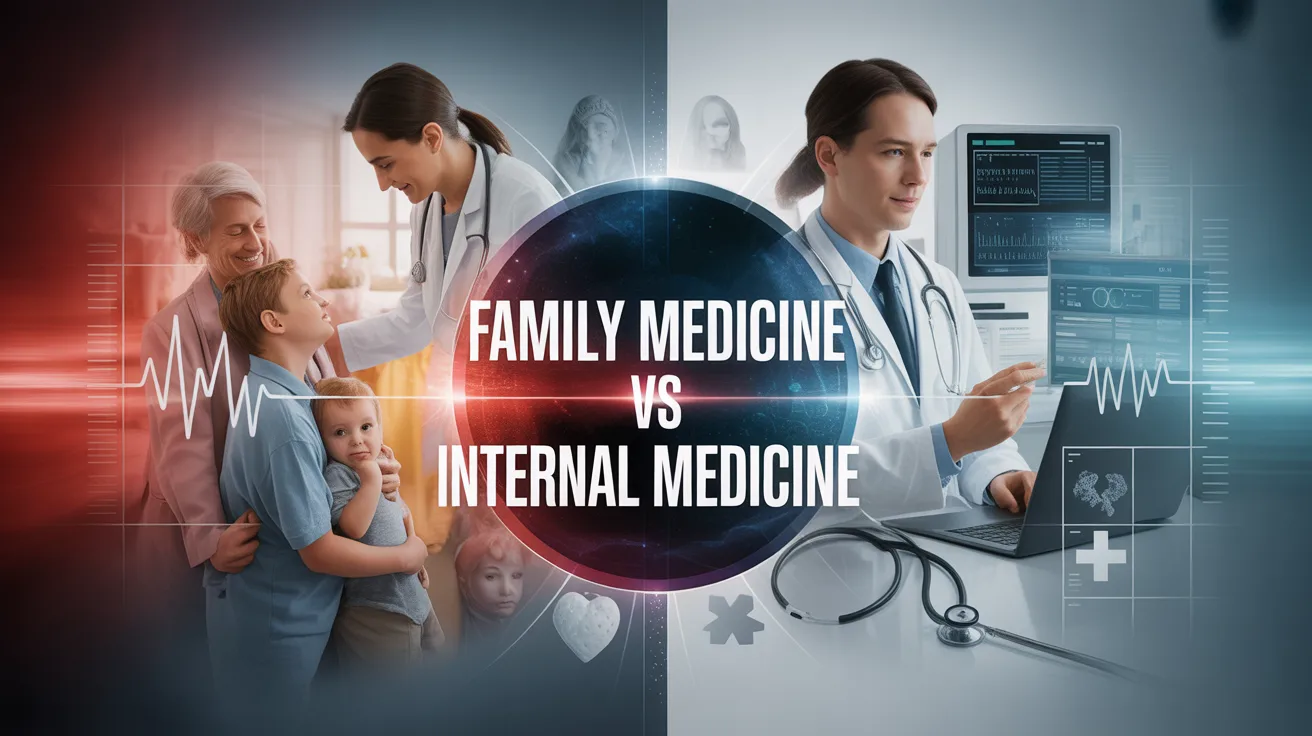
Family Medicine vs Internal Medicine: Which Primary Care Path is Right for You?
Managing primary care is essential for all. Therefore, it is important to opt for the right primary care physician who can assist you in the long-run. Choosing the right primary care physician is not always straightforward, you need someone who understands your medical history, communicates effectively, and knows when to involve specialists, speaks your language, and knows when to call in the experts. In many practices, this also includes access to family healthcare services that help patients receive coordinated long-term care.
For many adults, that choice comes down to two fields, family medicine vs internal medicine, which may appear identical. While both are primary healthcare practices, their philosophies, training, and daily practices differ in ways that could significantly impact your healthcare experience. Therefore, this blog helps you understand the nuances of family medicine vs internal medicine.
Family Medicine vs Internal Medicine: Understanding the Core Philosophy
The primary difference between family medicine and internal medicine lies in the scope of the patient population and helps clarify what is family medicine in real clinical settings.
Family Medicine
In terms of family medicine vs internal medicine, the former is built on the concept of continuity across the lifespan. Essentially, a family physician is trained to treat everyone from a newborn to a great-grandparent. They are trained to understand and manage the diverse health needs of all family members.
Internal Medicine
These specialists focus exclusively on adults. They are trained to solve complex diagnostic issues and manage chronic, multi-system diseases. In addition, these specialists have a deeper knowledge of the internal organ systems.
Training and Residency: Know How Family and Internal Medicine Specialists Specialize

When choosing internal medicine doctor vs family doctor, know that both paths require four years of medical school followed by a three-year residency. However, the curriculum during those three years varies wildly.
The Family Medicine Residency
In the elaboration of family medicine vs internal medicine, the family medicine residents rotate through various departments to be well aware of various health conditions. Their training includes:
Pediatrics
The field of pediatric care covers well-baby checks and childhood illnesses.
Obstetrics and Gynecology
Specialization for prenatal care and women’s health.
Adult Medicine
Adult medicine involves general outpatient and inpatient care.
Behavioral Health
The study of counseling and psychiatric basics.
The Internal Medicine Residency
When understanding the dynamics of internal medicine residency, it is to know that the residents spend three years focusing solely on adult physiology. Their training is often more hospital-heavy and includes sub-specialty rotations such as:
Cardiology and Endocrinology
A specialized, collaborative field managing the intersection of heart disease and hormonal disorders, such as diabetes, thyroid dysfunction, and obesity.
Rheumatology and Infectious Disease
Rheumatology and Infectious Disease are closely linked, as infections can trigger autoimmune rheumatic diseases, while immunosuppressive treatments for the latter increase infection risks.
Gastroenterology and Nephrology
Gastroenterology focuses on diagnosing and treating diseases of the digestive system (esophagus, stomach, intestines, liver, pancreas, gallbladder), while Nephrology is centered around kidney care, including chronic kidney disease, dialysis, and renal transplantation.
Critical Care/ICU Medicine
Intensive care medicine is a specialized medical field focused on treating patients with severe, life-threatening illnesses or injuries, often involving single or multiple organ failures.
Clinical Scope of Family Medicine vs Internal Medicine: What Happens in the Exam Room?
In many modern healthcare systems, patients may also access diagnostic support services such as Comprehensive Diagnostic Lab Testing to ensure faster and more accurate diagnosis of medical conditions.
The birth-to-death record is maintained by the family medicine specialist.
The internal medicine doctor manages records of 18+ patients — both Adults and Seniors.
The family medicine specialist looks into regular PAP smears, contraception, and sometimes OB care.
Internal medicine specialists focus on general wellness. However, they rarely focus on OB.
Family medicine specialists provide a full spectrum of childhood care.
Internal medicine specialists do not cover pediatrics — a key difference between the two fields.
High volumes of acute / varied issues are dealt with by these specialists.
They focus on chronic / complex multi-disease conditions.
Minor skin surgeries and joint injections are performed by family medicine specialists.
Joint injections and diagnostic workups are looked after by internal medicine specialists.
Which One Should a Patient Choose from Between Family Medicine and Internal Medicine?
When deciding between family medicine vs internal medicine, doctors first focus on your current life stage and health goals.
Why Choose Family Medicine?
In terms of internal medicine doctor vs family doctor, here are the reasons why you should choose the latter.
Convenience for Families
If you have children, you can often schedule back-to-back appointments for yourself and your kids at the same clinic.
Long-term Relationships
Family medicine doctors often see patients through decades of life changes. They are well-acquainted with your family history and this helps them to craft better treatment plans.
Wellness and Prevention
There is a heavy emphasis on lifestyle, community health, and outpatient wellness.
Why Choose Internal Medicine?
The following are the reasons why internal medicine specialists prove better than family medicine specialists:
Complex Chronic Conditions
A prominent difference between family medicine and internal medicine is that internal medicine specialists can help you manage chronic conditions. These often include conditions such as Type 2 diabetes, hypertension, and heart disease.
Diagnostic Puzzles
If you have vague, systemic symptoms that haven’t been diagnosed, an internist is specifically trained to detect hidden adult illnesses.
The Adult-Only Environment
Some adults prefer a waiting room that isn’t shared with crying infants or energetic toddlers that internal medicine specialists can offer.
Sub-Specialization: Where Do Family Medicine and Internal Medicine Doctors Go Next?
Deciding between family medicine and internal medicine doesn’t have to be complicated. Richmond Medical Clinic, a trusted family medicine clinic in Richmond, offers skilled physicians in both specialties so patients can receive care tailored to their unique health needs.
However, another way to distinguish between family medicine vs internal medicine is to look at where these doctors go if they decide to specialize further.
Internal Medicine
Internal medicine often serves as a pathway to subspecialties such as cardiology, pulmonology, and oncology.” Essentially, they can become a Cardiologist, Pulmonologist, or Oncologist. However, you must first complete a residency in Internal Medicine.
Family Medicine
Family Medicine path usually leads to fellowships in Sports Medicine, Geriatrics, Hospice and Palliative Medicine, or Sleep Medicine.
Final Thoughts
In terms of family medicine vs internal medicine, neither is better than the other. However, it is recommended that you choose a Family Medicine doctor if you want your entire household to be looked after by a single specialist. On the other hand, go for an Internal Medicine doctor if you are an adult with complex medical needs or a strong family history of chronic diseases and want a specialist in adult internal systems.
Where Can You Find a Good Family Medicine Clinic?
Richmond Medical Clinic in Texas is committed to providing high-quality healthcare. Our experienced physicians and caring staff focus on the health and well-being of you and your family. We deliver comprehensive medical services supported by rigorous quality standards to ensure exceptional care.
Frequently Asked Questions (FAQs)
Q1. Do I need a referral from a Family Doctor to see an Internist?
No, both are considered Primary Care Physicians (PCPs). You can choose either as your main doctor through your insurance plan. You only need a referral if you are moving from your PCP to a sub-specialist (like a Cardiologist).
Q2. Which one is better for elderly patients?
Both are qualified, but it depends on the patient’s health status. However, Internal Medicine is often preferred for seniors with multiple chronic conditions (like heart failure and kidney disease). On the other hand, Family Medicine is also good for seniors who prefer a holistic approach and may have been seeing that same doctor for decades.
Q3. Do I need a referral from a Family Doctor to see an Internist?
No, both are considered Primary Care Physicians (PCPs). You can choose either as your main doctor through your insurance plan. You only need a referral if you are moving from your PCP to a sub-specialist (like a Cardiologist).
Q4. What is the main difference between a Family Medicine doctor and an Internal Medicine doctor?
The main difference lies in the scope of care and patient population. Family Medicine doctors treat patients of all ages, from infants to seniors—and focus on comprehensive, long-term care for the whole family. Internal Medicine doctors, on the other hand, specialize in adult care only and are particularly trained to diagnose and manage complex medical conditions and chronic diseases in adults.
Q5. Can a Family Medicine doctor treat chronic diseases like diabetes or hypertension?
Yes, Family Medicine doctors are fully trained to diagnose and manage common chronic conditions such as diabetes, hypertension, and asthma. However, if a condition becomes complex or requires specialized care, they may refer patients to an Internal Medicine doctor or a specialist for more advanced treatment.